
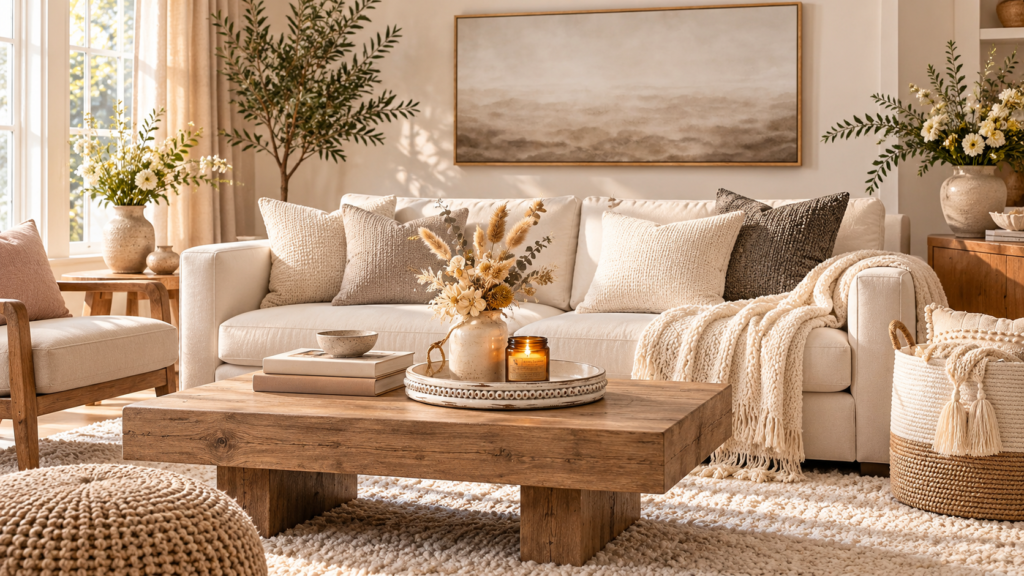
A neutral living room has a way of making a home feel calm, comfortable, and effortlessly put together. But decorating with beige, cream, and other understated shades can be trickier than it looks. Without enough contrast or texture, a room can feel flat, unfinished, or a little too plain.
The secret is knowing how to layer those subtle details. With the right mix of warm colors, soft textiles, natural-looking materials, and personal accents, you can create a living room that feels inviting without relying on bold colors or constantly changing trends.
These neutral living room decor ideas will help you bring your space together, whether you’re refreshing a small apartment or styling a larger family room. You can use what you already own, make a few thoughtful updates, and create a timeless look that feels like home.
Disclosure: This article contains affiliate links. As an Amazon Associate I earn from qualifying purchases.
1. Start With a Warm, Cohesive Neutral Color Palette
Before adding decorative accessories, look at the colors already in your living room. Your wall color, flooring, sofa, and larger furniture pieces will influence which neutral shades work best together.
Cream, ivory, beige, taupe, warm gray, and soft brown can all create a beautiful foundation. The key is to choose a main shade and build around it rather than using every neutral color at once.
For example, if you have a cream sofa and light walls, you could introduce beige curtains, taupe pillows, and a few deeper brown accents. If your flooring has warm wood tones, repeat those tones in your accessories to make the room feel connected.
Pay attention to undertones, too. Some whites and grays feel cool, while others lean warm. They don’t have to match perfectly, but choosing shades that complement one another makes the overall palette feel more intentional.
You can also use contrast to keep the room from looking washed out. Darker wood, a black picture frame, or a warm brown accent can give lighter colors more definition.
Styling tip: Start with three colors: one dominant neutral, one supporting shade, and one deeper accent. Repeat them in different parts of the room for a cohesive look.
If you want to make your space feel even more inviting, explore our guide to cozy living room ideas for practical tips on layering soft textures, choosing warm lighting, and creating a comfortable atmosphere.
2. Layer Textures to Keep the Room From Feeling Flat
One of the easiest ways to make neutral home decor feel interesting is to mix textures. When the color palette is simple, differences in fabric, finish, and shape become more noticeable.
Think about how a smooth sofa might look alongside woven pillows, a soft throw, a textured rug, and a ceramic accessory. Each piece adds something different without introducing a completely new color scheme.
Throw pillows are a good place to start because they’re easy to rearrange or switch out. Consider the Volcanics Boho Throw Pillow Covers as an optional way to introduce pattern and texture to a neutral seating area. Check the listing for the available designs, dimensions, fabric details, and care instructions before choosing a set.
You can also work with textures you already have. Drape a blanket over the sofa, layer a rug over an existing floor finish if appropriate, or bring a woven basket into an empty corner.
The goal isn’t to cover every surface. A few contrasting textures can make a bigger impact than a room full of decorative items.
Styling tip: Combine smooth, soft, and naturally textured finishes. If your sofa and rug are both visually simple, use pillows or a throw to add a little more depth.
3. Use Beige and Brown Accents for Subtle Contrast
Beige living room decor can look beautiful on its own, but a room filled with similar shades may lack definition. Adding a few deeper tones helps create balance while keeping the space calm and understated.
Warm brown, caramel, tan, and taupe work well with cream and ivory. You can introduce these colors through wood furniture, pillow covers, artwork, lamps, or small decorative accessories.
Try repeating a darker shade in at least two places. For example, a brown accent on the coffee table can connect with a darker pillow or a frame on the wall. This creates a visual thread that helps the room feel coordinated.
If your living room is small, you don’t have to avoid darker colors altogether. Use them in smaller details rather than large, heavy-looking pieces if you want to maintain a lighter overall feel.
You can also vary the finishes. A dark wood table, a soft brown textile, and a ceramic accessory will look more layered than several objects with the same color and finish.
Styling tip: Step back and look at the room as a whole. If everything blends together, add one or two darker accents. If the room already has strong contrast, keep the remaining accessories lighter.
4. Add Wall Art That Complements the Color Palette
Wall art can bring a neutral living room together by repeating the colors and shapes found elsewhere in the space. It also helps an otherwise simple room feel more personal.
Abstract prints, landscape artwork, and understated line drawings can all work with neutral home decor. Choose pieces that complement your existing palette rather than trying to match every accessory exactly.
For a coordinated look, consider the Neutral Beige Brown Abstract Wall Art as an optional addition. It may suit a room built around warm neutrals, but review the actual listing images, dimensions, format, and frame details before deciding whether it fits your wall.
Scale matters just as much as color. Artwork that is too small can look lost above a sofa or console, while a piece that overwhelms the wall may compete with the furniture.
Before hanging anything, measure the available wall space and consider the furniture beneath it. You can even use paper templates to test different arrangements before making holes.
Frames offer another opportunity to introduce contrast. Natural wood can reinforce a warm palette, while black frames can add a cleaner, more defined edge.
Styling tip: Let your artwork guide a few of your accent choices. Pull one or two colors from the piece into your pillows, vase, or other accessories to create a subtle connection throughout the room.
5. Bring in Organic Shapes and Decorative Accents
A room filled with rectangular furniture, straight shelves, and clean lines can sometimes feel a little rigid. Rounded shapes and sculptural accessories soften the look without changing your entire decorating scheme.
Vases are an easy way to introduce a different silhouette. Place one on a console, bookshelf, side table, or coffee table, and let its shape add interest even when it’s not filled with flowers.
The Ceramic Flower Vase is an optional accent to explore if you’re looking for a decorative piece that works with a neutral palette. Check the listing for its actual shape, color, dimensions, and material details before styling it in your home.
You can leave a vase empty, add fresh flowers, or use dried stems for a more relaxed arrangement. The best choice depends on your style and how much maintenance you want.
Other organic touches can include a curved bowl, a rounded decorative object, or a houseplant that suits the light in your room. Mix these shapes with your existing furniture instead of adding several new accents at once.
Styling tip: Choose one sculptural accent for a surface that feels bare. Give it some space so its shape stands out rather than surrounding it with lots of smaller objects.
6. Style a Coffee Table With a Simple, Balanced Arrangement
A coffee table is one of the easiest places to experiment with minimalist living room decor. A few well-chosen objects can make it feel finished while leaving room for drinks, books, and everyday use.
Start by clearing the table and deciding how much open space you want to keep. Then build a small arrangement using a tray, a book or two, and one decorative accent.
A decorative tray for the coffee table can help group smaller objects together, while decorative books for the coffee table and shelf can introduce another layer to the display. These are optional styling ideas; check each listing for the actual design, dimensions, materials, and intended use.
Vary the heights of your objects to create a little visual interest. For example, a low tray paired with a small vase or a short stack of books creates a more balanced arrangement than several objects of identical height.
Keep practicality in mind. If your coffee table is small, one or two accessories may be enough. If you use the table throughout the day, leave a clear area for the things you regularly reach for.
You don’t need a matching set of decorative pieces, either. A few items that share a color or material can look more natural than accessories that are identical.
Styling tip: Arrange the objects, then remove anything that feels unnecessary. A little open space helps the table look intentional and keeps it easy to use.
7. Use Baskets to Add Texture and Everyday Storage
A timeless living room should look good, but it also needs to work for everyday life. Blankets, magazines, remotes, and other small items can quickly make a carefully styled space feel cluttered.
A storage basket offers a simple way to keep frequently used items together while adding another layer of texture. Depending on its size and design, it may work beside the sofa, under a console, or in a corner where extra storage is useful.
You can explore this storage basket as an optional addition to your room. Check its listed dimensions, construction, and care instructions to make sure it suits the items you want to store and the space you have available.
Keep the basket somewhere convenient. A blanket basket beside the sofa is more useful than one tucked away across the room, while a smaller organizer may make more sense near a reading chair.
If you already own baskets, try moving one from another room before buying something new. Storage pieces don’t need to match perfectly to work together, especially when they share complementary tones or textures.
Styling tip: Give each storage container a purpose. Keeping similar items together makes it easier to maintain a tidy living room without hiding everything away.
8. Create a Minimalist Look Without Making the Room Feel Empty
Minimalist living room decor isn’t about removing every accessory or leaving the room completely bare. It’s about being selective with what you display and giving each piece enough space to be appreciated.
Start by looking at your shelves, coffee table, and console. Remove items that no longer serve a purpose or that make the arrangement feel crowded. Then return a few favorites, paying attention to how their colors, sizes, and shapes work together.
Balance is important. A large empty wall may need one well-scaled piece of art, while a smaller shelf may look best with just a few objects. You don’t have to fill every gap simply because there’s room.
The same principle applies to furniture. Make sure the main pieces suit the room’s proportions and leave comfortable paths for walking. In smaller spaces, keeping the floor and tabletops relatively clear can help the room feel more open.
A neutral color palette can support this approach, but simplicity doesn’t have to mean a lack of personality. A favorite photograph, an interesting vase, or a meaningful book can bring character to the space without making it feel busy.
Styling tip: Before purchasing another accessory, ask yourself where it will go and what it adds. If it doesn’t improve the room’s function or appearance, you may not need it.
9. Personalize the Space With Meaningful Details
A neutral living room should reflect the people who live in it. Without personal touches, even a beautifully coordinated space can feel more like a showroom than a home.
Books you enjoy, framed photographs, travel finds, plants, and favorite decorative objects can make the room feel individual. These items don’t have to follow a strict design theme; they simply need to work reasonably well with the rest of the space.
If you prefer a more polished look, group related objects together. A few books beside a vase can create a natural arrangement, while a collection of framed photographs can bring a personal touch to a shelf or side table.
Don’t be afraid to mix old and new pieces. A treasured object can sit comfortably alongside newer decor when the colors, proportions, or finishes feel balanced.
You can also refresh the room as your tastes change. Rearrange your shelves, rotate artwork, or move accessories between rooms instead of replacing everything whenever a new trend appears.
Styling tip: Choose a few items that have personal meaning and give them room to stand out. A neutral background makes it easier to appreciate the details that matter to you.
Common Neutral Living Room Decorating Mistakes to Avoid
Neutral decorating is flexible, but a few common missteps can make a room feel less cohesive than you intended.
- Using only one shade: Too much of the same beige or cream can make the space feel flat. Introduce a few complementary tones and textures.
- Ignoring undertones: Warm and cool neutrals can work together, but consider how they look beside your existing flooring, walls, and furniture.
- Overcrowding the coffee table: Too many accessories can make the room feel cluttered. Leave open space for everyday use.
- Choosing artwork that’s too small: Consider the size of the wall and furniture before selecting a piece.
- Buying decor without a plan: An attractive accessory may not suit your room. Think about where it will go and how it will work with what you already own.
- Removing too much personality: A timeless space can still include favorite colors, meaningful objects, and personal collections.
The aim isn’t to follow rigid rules. It’s to create a room where the colors, textures, and furnishings work together while still reflecting your preferences.
Final Thoughts on Neutral Living Room Decor Ideas
The most successful neutral living room decor ideas balance simplicity with warmth. A thoughtful color palette creates the foundation, layered textures add depth, and carefully chosen artwork and accessories give the room personality.
You don’t need to redecorate from scratch to get the look. Start with the furniture and decor you already own, identify what feels missing, and make a few intentional changes at a time.
Whether you prefer soft beige living room decor, a more modern minimalist look, or a collected mix of natural textures and personal details, the goal is the same: a space that feels welcoming, functional, and true to your style.
For more inspiration, explore VELORAE’s Home Decor articles for practical styling ideas and approachable ways to create a home that feels beautiful and lived-in.
Pingback: 9 Cozy Living Room Ideas for a Warm, Inviting Space