
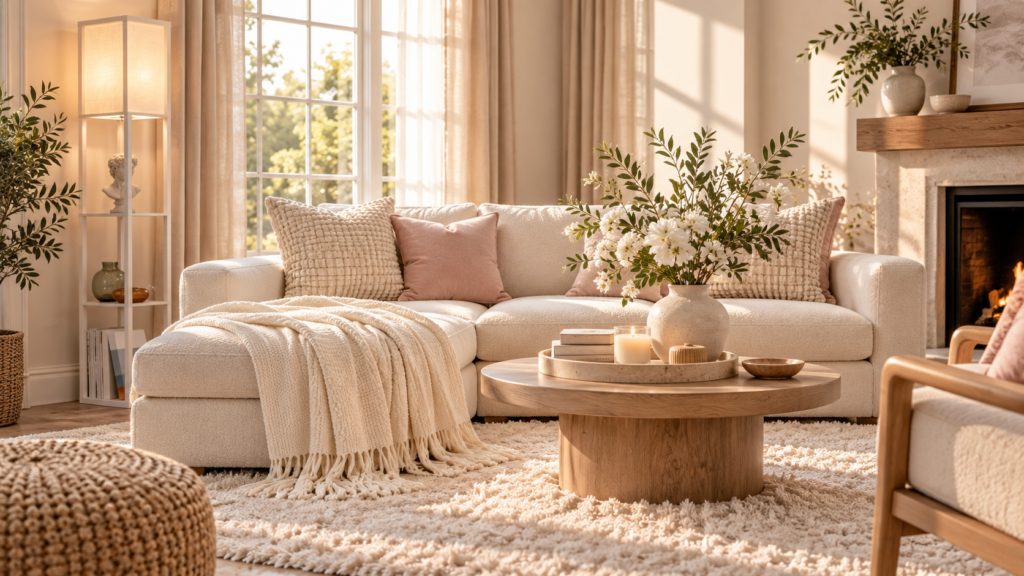
There’s something special about a living room that makes you want to kick off your shoes, curl up on the couch, and stay a little longer. It doesn’t have to be large or filled with expensive furniture. Sometimes, it’s the soft throw draped over the sofa, the warm glow of a floor lamp, or the way your favorite colors come together that makes a room feel like home.
If your living room feels a little bare, cold, or unfinished, a few thoughtful changes can make all the difference. The best cozy living room ideas focus on comfort, texture, lighting, and personal touches rather than buying an entirely new set of furniture.
Whether you’re decorating a spacious family room or working with a small apartment, these nine ideas will help you create a warm, inviting space that feels stylish without sacrificing everyday comfort.
Disclosure: This article contains affiliate links. As an Amazon Associate I earn from qualifying purchases.
1. Layer Soft Textures for a Cozy Living Room
A comfortable sofa is a great starting point, but the right textiles are what make a living room feel extra inviting. Mixing different textures adds depth to the space and helps even a simple neutral sofa feel more thoughtfully styled.
Start with throw pillow covers in complementary colors. Cream, beige, warm brown, and muted blush are easy to combine, especially when you mix smooth fabrics with woven or subtly textured finishes.
You don’t need to cover the entire sofa with pillows. Try a pair at each end, or combine two larger pillows with a smaller accent pillow for a relaxed arrangement.
Explore these throw pillow covers on Amazon to find an option that suits your color palette and decorating style. Before choosing a set, consider the cover dimensions, fabric, closure, and care instructions.
Next, add a soft throw blanket to the sofa arm or fold one over the back of an accent chair. The slightly relaxed look keeps the room from feeling too formal.
Styling tip: Stick to two or three complementary colors and vary the textures. The goal is to make the room feel layered, not cluttered.
2. Use Warm Lighting to Create an Inviting Atmosphere
Lighting can completely change the mood of a living room. A single overhead light may be practical, but it doesn’t always create the relaxed atmosphere you’re looking for in the evening.
Instead, combine different light sources so the room feels comfortable throughout the day.
A floor lamp is particularly useful beside a sofa or reading chair. It adds height to the room, fills an empty corner, and provides light where you need it without taking up much tabletop space.
For a clean, contemporary look, consider a modern shelf floor lamp. Its shelf-style design makes it a potential option for combining lighting with decorative styling. Check the product listing for its actual dimensions, shelf capacity, bulb requirements, and other specifications before purchasing.
You can complement your floor lamp with a table lamp on a side table or console. Choose warm-toned lighting if you prefer a softer evening atmosphere, and make sure the brightness suits your activities.
Styling tip: Place a lamp near your main seating area and turn it on in the evening. You’ll get a better sense of how the lighting works with your furniture and wall colors.
3. Choose a Warm, Cohesive Color Palette
A cozy living room doesn’t have to be filled with dark colors. Light neutrals can feel just as warm when you combine them with natural materials, soft textiles, and a few deeper accents.
Cream, ivory, beige, warm taupe, and soft brown make a versatile foundation. You can then bring in muted blush, terracotta, olive green, or another accent color that suits your style.
The secret is to give each color a purpose.
For example, you might use cream for the larger pieces, beige for the curtains or rug, and warm brown in the pillows, wood furniture, or decorative accessories. Repeating these shades throughout the room helps everything feel connected.
If your living room already has a colorful sofa or patterned rug, use those existing pieces as your starting point. Pull one or two colors from the pattern and repeat them in smaller accents.
You also don’t need to repaint your walls to change the room’s overall feel. Swapping pillow covers, rearranging accessories, or adding a coordinating throw can refresh the palette without a major expense.
If you love a calm, timeless look, explore our guide to neutral living room decor ideas for more inspiration on styling beige tones, layering textures, and creating a beautifully balanced living space.
Styling tip: Before buying new decor, take a photo of your living room and look at the colors together. It can help you spot which shades are missing and which ones you already have plenty of.
4. Add Natural Materials and Organic Details
Natural materials bring variety to a living room, especially when the main furniture and textiles are neutral. Wood, ceramic, woven fibers, linen, and greenery each introduce a different texture without requiring bold colors.
A wooden coffee table can warm up a room with light upholstery. A woven basket can hold extra blankets, while a ceramic vase adds a simple decorative accent to a console or side table.
For a soft, understated look, try a ceramic flower vase with fresh flowers, dried stems, or a few seasonal branches. Choose a size and shape that work with the surface you’re decorating, and check the listing for material and care details.
You don’t have to fill the vase with flowers, either. A simple arrangement of branches can add height, while an empty vase with an interesting silhouette can stand on its own.
Plants are another way to bring life into a room. Choose varieties that suit your available light and the amount of care you’re comfortable providing.
Styling tip: Group a few different materials together, such as wood, ceramic, and woven fabric. Their contrasting textures add interest without making the space feel busy.
5. Style Your Coffee Table Without Overcrowding It
A coffee table is often at the center of the living room, so even a small styling change can make the entire seating area feel more finished.
The trick is to create a simple arrangement while leaving enough room for everyday use.
Start with a decorative tray to bring smaller items together. Add a book or two, a small vase, or one favorite decorative object. Vary the heights slightly so the arrangement feels balanced rather than flat.
For a warm, natural look, combine a wooden tray with a ceramic accent and a small vase. If your coffee table already has a bold finish or interesting shape, keep the accessories simple so the table remains the focal point.
Think about how you use the space, too. If you regularly enjoy coffee on the couch, leave enough open surface for mugs and snacks. If you have children or pets, avoid fragile accessories in areas where they’re likely to be knocked over.
You can create a fresh look without buying anything. Try moving accessories from another room, removing a few unnecessary items, or rearranging what you already own.
Styling tip: Use the rule of editing rather than adding. Once your arrangement looks good, remove one item and see whether the table feels more balanced.
6. Make the Seating Area Feel Comfortable
A cozy living room should work just as well for a quiet evening alone as it does for a movie night with friends. The way you arrange the furniture plays a big part in making that happen.
If possible, position the main seating around a natural focal point, such as a coffee table, fireplace, or window. Arrange additional chairs so people can talk comfortably instead of having every seat pointed in a different direction.
Keep walking paths clear, particularly between the entrance, sofa, and other frequently used areas. Even a beautiful room can feel awkward if you have to squeeze between furniture to move around.
Soft furnishings can help tie the seating area together. Repeat colors from your rug in the pillows, or use a throw to introduce a texture that’s missing from the sofa.
If you’re not happy with your current arrangement, experiment before buying new furniture. Move a chair closer to the sofa, shift a side table, or reposition the rug to better define the seating area.
Styling tip: Sit in your usual spot and look around. Can you reach a table easily? Is the lighting comfortable? Does the room feel open enough to move around? Start with those practical details before focusing on decorative extras.
7. Incorporate Wall Art and Personal Details
Sometimes a living room feels unfinished because the walls are bare or the decor doesn’t reflect the people who live there.
Artwork, framed photographs, mirrors, and meaningful objects can add personality without requiring a complete redesign.
Above a sofa, choose artwork that’s appropriately scaled to the furniture. A larger piece can create a strong focal point, while a collection of smaller frames can give the room a more personal, collected feel.
You don’t need every frame or decorative object to match. Instead, look for a connection through color, subject, finish, or overall style.
A mirror can also be useful in a smaller living room, particularly when it reflects a window or another source of natural light. Consider the placement carefully so it reflects something you’d like to see.
On shelves and consoles, mix personal items with a few decorative accents. Leave some open space around them so the display doesn’t look crowded.
Styling tip: Start with one piece you genuinely love, then build around it. A room usually feels more personal when the decor has meaning rather than simply matching a trend.
8. Try Cozy Small Living Room Ideas That Make the Most of Your Space
A small living room can feel warm and stylish without being packed with furniture. In fact, giving each piece enough room to breathe can make a compact space feel more inviting.
When planning your layout, start with the essentials: comfortable seating, a practical surface, and lighting that works for your routine.
Here are a few ways to make a smaller living room feel more functional:
- Choose furniture that fits. Measure your room before buying a sofa, coffee table, or accent chair.
- Use multipurpose pieces. An ottoman with storage or a side table with a lower shelf can help reduce clutter.
- Make use of vertical space. Wall shelves and taller storage pieces can free up valuable floor space.
- Keep the color palette connected. Repeating a few shades throughout the room helps create a cohesive look.
- Use lighting thoughtfully. A slim floor lamp or wall-mounted light can brighten a corner without adding another large piece of furniture.
- Edit your accessories. Display a few favorite items instead of filling every available surface.
A rug can also help define a small seating area. Choose a size that relates to the furniture arrangement rather than automatically opting for the smallest rug available.
Before purchasing one, measure the room and check how the rug will sit beneath or in front of your sofa and chairs. The right placement can help the furniture feel connected.
If you’re looking to bring the seating area together, explore these rugs for the living room and compare the available sizes, materials, and care requirements before choosing one. A rug that fits your furniture arrangement can help define the space without making a small room feel crowded.
Styling tip: Try rearranging your existing furniture first. Sometimes moving a chair, clearing a walkway, or relocating a bulky accessory makes a bigger difference than buying something new.
9. Finish With Simple Seasonal and Personal Touches
One of the easiest ways to keep your living room feeling fresh is to change a few small details throughout the year.
You don’t need an entirely different decor scheme for every season. A flexible foundation of neutral furniture, natural materials, and comfortable textiles makes it easy to update the look with just a few accessories.
For fall and winter, try warmer accent colors, a textured throw blanket, or a ceramic vase filled with seasonal stems. In spring and summer, lighter pillow covers, fresh flowers, or greenery can give the room a brighter feel.
The throw blanket linked here is an option to explore if you’re looking to add another soft layer to your seating area. Before ordering, check the listed dimensions, fabric, care instructions, and available colors to make sure it suits your needs.
You can also refresh the room without shopping. Move a favorite accessory from another space, change the arrangement on your coffee table, or swap pillow covers you already own.
Keep seasonal decorations organized so you can reuse them rather than buying new pieces every year.
Styling tip: Pick one or two details to change at a time. A different throw, a few seasonal stems, or a refreshed pillow arrangement may be all you need.
Final Thoughts: Create a Living Room That Feels Like Home
The best cozy living room ideas aren’t about making a space look perfect. They’re about creating a room that feels comfortable, welcoming, and suited to your everyday life.
Start with soft textures, warm lighting, and a color palette that works with your existing furniture. Add natural materials, keep your coffee table simple, and arrange your seating so the room feels easy to use. Finish with artwork and personal details that make the space feel like yours.
You don’t have to change everything at once. Try one idea this week, work with what you already own, and make thoughtful additions when they genuinely improve your space.
For more inspiration, explore VELORAE’s Home Decor articles for approachable decorating ideas, practical styling tips, and ways to create a home that feels both beautiful and lived-in.
Pingback: Neutral Living Room Decor Ideas for a Timeless Look - Velorae