
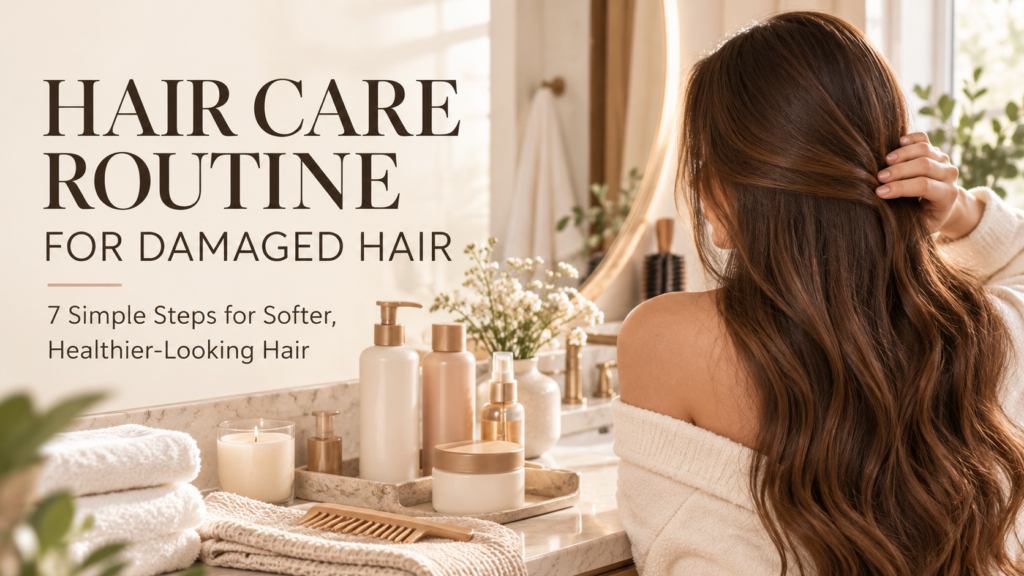
Hair that feels dry, rough, frizzy, or difficult to detangle can make everyday styling frustrating. Frequent heat styling, chemical treatments, and rough handling can all contribute to hair damage, leaving strands more prone to breakage.
The good news is that you can make your routine gentler without buying an entire shelf of new products. A thoughtful hair care routine for damaged hair focuses on cleansing the scalp, conditioning the lengths, detangling carefully, and reducing habits that place unnecessary stress on your hair.
This seven-step guide walks you through the basics, explains which products may be worth considering, and helps you build a routine that suits your hair’s needs. Existing damage may not be completely reversible, so the goal is to improve manageability and reduce further damage rather than promise an instant transformation.
Affiliate Disclosure: This post contains affiliate links. As an Amazon Associate, VELORAE earns from qualifying purchases.
What Can Cause Damaged Hair?
Hair can become dry, rough, brittle, or more difficult to manage for several reasons. Common contributors include:
- Frequent heat styling: Blow-dryers, flat irons, and curling irons can damage hair when used excessively or at high temperatures.
- Chemical treatments: Bleaching, coloring, perming, and chemical straightening can weaken the hair shaft.
- Rough towel drying: Vigorous rubbing can create unnecessary friction.
- Aggressive detangling: Pulling a comb or brush through knots can contribute to breakage.
- Repeated friction and tension: Tight hairstyles and rough handling may put additional stress on fragile strands.
The American Academy of Dermatology recommends gentle handling, regular conditioning, and reducing excessive heat to help minimize avoidable hair damage. Read its haircare guidance.
Hair Care Routine for Damaged Hair: 7 Simple Steps
Step 1: Cleanse Gently With a Suitable Shampoo
A good routine starts with cleansing your scalp without unnecessarily roughening the lengths of your hair. The right washing frequency depends on how oily your scalp gets, your hair texture, and your usual styling routine.
Focus shampoo on your scalp and gently massage it with your fingertips. As you rinse, allow the shampoo to flow through the lengths instead of aggressively rubbing them together.
Choose a shampoo that suits your scalp and hair needs. If your hair feels dry after washing, consider whether your current formula or washing frequency needs adjusting.
If you’re looking for a coordinated option, you can explore this shampoo and conditioner set. Check the current listing for its brand, ingredients, intended hair types, and directions before deciding whether it suits your routine.
Keep in mind: You don’t need to wash on a rigid schedule. Let your scalp’s oiliness, activity level, and hair needs guide your routine.
Step 2: Condition After Washing
Conditioner is an important part of a gentle haircare routine because it helps smooth the hair’s surface, reduce friction, and make strands easier to detangle.
After shampooing, apply conditioner according to the product directions. For fine or straight hair, concentrating on the lengths and ends may help avoid weighing the roots down. For dry, thick, or curly hair, applying conditioner more broadly along the hair may be useful.
Give extra attention to the ends if they feel rough or tangle easily. These areas often need careful handling because they have been exposed to everyday styling and friction over time.
You may not need a separate treatment for every concern. If your regular conditioner leaves your hair manageable, start there before adding more products.
Step 3: Add a Deep-Conditioning Hair Mask When Needed
If your hair still feels dry or difficult to manage after regular conditioning, an occasional deep-conditioning mask may be worth considering.
A mask can be an optional addition to your routine, particularly when your usual conditioner doesn’t provide the level of conditioning you prefer. Its effect depends on the formula, your hair’s condition, and how you use it.
You can explore this deep-conditioning hair mask as one option. Review the current product listing and follow the manufacturer’s instructions for application and frequency.
Avoid assuming that a mask will permanently repair split ends or reverse every type of damage. Conditioning products can improve how hair feels and behaves, but severely damaged ends may still need to be trimmed.
Styling tip: Introduce one new treatment at a time so you can tell whether it actually fits your routine.
Step 4: Use a Leave-In Conditioner for Extra Manageability
A leave-in conditioner stays in the hair rather than being rinsed out. Depending on the formula, it may help make hair easier to detangle, soften the lengths, and manage frizz during styling.
This step can be particularly useful if your hair tangles between washes or your regular conditioner isn’t enough for your preferred styling routine. However, it’s optional. You may not need it if your existing conditioner already gives you the results you want.
If you want to explore one, consider this leave-in hair conditioner. Check the label for its intended use, application directions, and suitability for your hair type.
Start with the amount recommended by the manufacturer rather than applying more in the hope of getting better results. Fine hair may become weighed down by some formulas, while thicker or drier hair may tolerate richer products differently.
Step 5: Detangle Gently With a Wide-Tooth Comb
Detangling is a small part of a routine that can make a difference to how much pulling your hair experiences.
Instead of forcing a brush or comb through knots, work slowly in manageable sections. Starting at the ends and gradually moving upward can help you work through tangles without pulling through the full length at once.
A wide-tooth detangling comb is one tool to consider if your current brush makes it difficult to work through knots gently.
The best time to detangle depends on your hair texture. Straight hair may benefit from drying a little before combing, while curly or tightly textured hair is often easier to detangle when damp and conditioned. Avoid aggressively combing fragile strands.
Styling tip: If you meet a stubborn knot, pause and work through it gently instead of pulling harder.
Step 6: Dry Hair Gently With a Microfiber Hair Towel
How you dry your hair matters, too. Vigorous towel rubbing can create friction, especially when your strands are already fragile.
Instead, gently press or blot your hair with a towel to absorb excess water. You can also wrap it loosely while you get ready, or let it air-dry when practical.
If you’d like an alternative to your usual towel, a microfiber hair towel may be worth considering. Treat it as an optional accessory rather than a requirement for healthy-looking hair.
No towel can guarantee frizz-free hair or eliminate all damage. The most important change is to avoid rough rubbing and handle your hair with care.
If you use a blow-dryer afterward, allow your hair to partially air-dry when practical and choose a lower heat setting.
Step 7: Limit Heat Styling and Use Heat Protection
Frequent heat styling can contribute to hair damage, so reducing how often you use hot tools is one of the most practical changes you can make.
When possible, alternate heat-styled looks with styles that require less heat. If you use a blow-dryer, curling iron, or flat iron, select a lower or moderate temperature appropriate for your tool and styling needs. Never use a flat iron or curling iron on wet hair unless the tool is specifically designed for that use.
A heat protectant spray may be useful when heat styling is part of your routine. You can explore this heat protectant spray, but check the product label to confirm that it is suitable for your tool and application method.
Remember that heat protection doesn’t make unlimited heat styling safe or eliminate all damage. Using hot tools less frequently and avoiding unnecessarily high temperatures remain important parts of a gentler routine.
How to Build a Routine for Your Hair Type
Not every haircare routine needs the same products or steps. Use your hair’s texture, scalp condition, and styling habits to decide what works best.
- Fine hair: Start with lighter conditioning products and use only as much as needed to keep your hair manageable.
- Thick or coarse hair: You may prefer richer conditioning products if they make your lengths easier to detangle and style.
- Curly or wavy hair: Handle tangles carefully and choose products designed for your texture. Detangling while damp and conditioned may be helpful.
- Color-treated or chemically treated hair: Follow product directions and choose a routine suited to treated hair. Consider reducing additional heat and chemical stress.
These are general starting points, not strict rules. If a product leaves your hair feeling heavy, coated, or harder to style, reconsider how much you use or whether the formula suits your needs.
Common Haircare Mistakes to Avoid
Sometimes improving your routine is more about changing a habit than adding a new product.
Using heat too often: Try spacing out hot-tool sessions and using lower temperatures where practical.
Rubbing hair vigorously with a towel: Blot or wrap your hair instead of rubbing it back and forth.
Pulling through tangles: Detangle in sections and work patiently through knots rather than forcing a comb through them.
Adding too many products at once: More products don’t automatically mean better results. Start with cleansing and conditioning, then add optional treatments only when they address a specific need.
Expecting one product to reverse all damage: Haircare products may improve softness, appearance, and manageability, but they cannot guarantee that existing damage or split ends will disappear.
If you’re experiencing unexplained hair loss, persistent scalp symptoms, or ongoing breakage despite gentler care, consider speaking with a board-certified dermatologist.
Haircare Essentials Worth Considering
You don’t need to purchase every item to build a useful routine. Start with the basics that suit your hair, then consider optional products if they address a specific concern.
- Shampoo and Conditioner — A cleansing and conditioning option to explore if you’re looking for a coordinated set. Verify the listing and intended hair types before purchasing.
- Deep-Conditioning Hair Mask — An optional treatment for readers who want additional conditioning beyond their usual routine.
- Leave-In Hair Conditioner — May be useful if you want additional help with detangling or everyday manageability.
- Wide-Tooth Detangling Comb — A tool to consider for gently working through tangles in manageable sections.
- Microfiber Hair Towel — An optional alternative for gently absorbing excess water without vigorous rubbing.
- Heat Protectant Spray — An option to investigate if you regularly use heat-styling tools. Confirm that the product is suitable for your styling method.
Product names here describe the categories supplied for this article. Confirm each listing’s identity, formula, directions, and suitability before publication. These products are suggestions, not a requirement to complete the routine.
Final Thoughts
A practical hair care routine for damaged hair begins with a few consistent habits: cleanse gently, condition after washing, detangle carefully, dry without rough rubbing, and reduce unnecessary heat styling.
Optional treatments and accessories may help address specific needs, but you don’t have to buy everything at once. Start with the steps that make sense for your hair, pay attention to how it responds, and adjust your routine when necessary.
For more beauty, self-care, and lifestyle inspiration, keep exploring VELORAE.